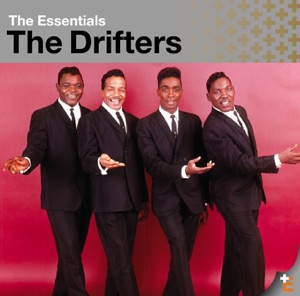





















A wedding invitation and a wheelchair Doc Pomus, who had polio as a child and walks on crutches, finds his wedding invitation in a drawer and remembers watching his bride dance with his brother at the reception. He writes Save the Last Dance for Me with Mort Shuman. Ben E. King sings lead for the Drifters after Atlantic's Ahmet Ertegun tells him the story behind the lyric. The record hits number one on both the pop and R&B charts. A twenty-one-year-old Phil Spector sits in on the session, apprenticing under producers Leiber and Stoller, absorbing every technique he will later turn into the Wall of Sound.
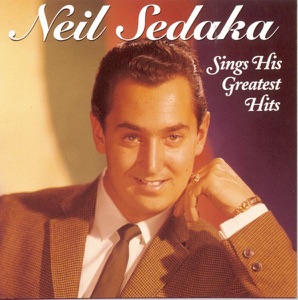
A cubicle, a piano, a legal pad At 1650 Broadway, across the street from the Brill Building, publisher Don Kirshner runs Aldon Music like a hit factory. Songwriters work nine to five in cubicles barely big enough for an upright piano, a bench, and a chair. Kirshner plays one team against another to maximize competitive pressure. Gerry Goffin and Carole King, Doc Pomus and Mort Shuman, Neil Sedaka and Howard Greenfield, Barry Mann and Cynthia Weil: they are all here, all writing to deadline, all within earshot of each other through the thin walls. King is eighteen years old.
The midnight re-recording Berry Gordy releases Shop Around by the Miracles in September and can't sleep. The tempo is too slow, there isn't enough life. He calls Smokey Robinson in the middle of the night and tells him to bring the whole group back to the studio at 2648 West Grand Boulevard. Gordy sits down at the piano himself, Benny Benjamin plays drums, and they cut a faster, harder version before dawn. The remake becomes Motown's first million-seller: number one R&B for eight weeks, number two pop. The building already has a sign out front: Hitsville U.S.A.
A 1930 song and a new kind of contract Ray Charles leaves Atlantic for ABC-Paramount with a deal almost unheard of for a Black musician: a fifty-thousand-dollar annual advance, full creative control, and ownership of his own master recordings. His first major single is Georgia on My Mind, a Hoagy Carmichael song from 1930, recorded with a full orchestra. It reaches number one on the Hot 100. Charles is a native Georgian singing someone else's standard, and he makes it sound like autobiography. The state legislature will later adopt his version as the official state song.
Eight hours a night behind a cinema screen Five musicians from Liverpool arrive in Hamburg in August: John Lennon, Paul McCartney, George Harrison, Stuart Sutcliffe, and Pete Best. They play the Indra Club for forty-eight nights, then the Kaiserkeller for fifty-six more, eight hours a night, seven days a week. Club owner Bruno Koschmider shouts Mach Schau from the back of the room. They sleep in a windowless closet behind the screen of the Bambi Kino, a cinema around the corner. Harrison is deported in November when police discover he is seventeen, too young to work in a nightclub past midnight. McCartney and Best are arrested after lighting a condom on fire in the dark to see their way around the back room.
The sloped floor and the projection booth Jim Stewart and his sister Estelle Axton rent a former movie theater at 926 East McLemore Avenue in Memphis for a hundred dollars a month. Axton has refinanced her house twice to buy an Ampex 350 mono tape recorder. The control room goes in the old projector booth. The sloped floor where theater seats once sat stays in place, and musicians set up on the flat section near the former stage. The room sounds like nothing else: deep, raw, wide open at the bottom. Rufus Thomas and his seventeen-year-old daughter Carla are the first to record there. They change the label's name to Stax, first two letters of Stewart, first two of Axton.
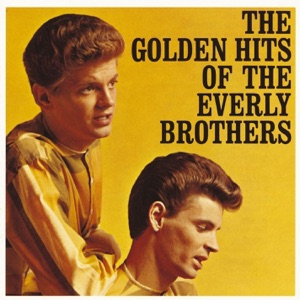
A song offered to Elvis and the Everly Brothers Roy Orbison and Joe Melson write Only the Lonely and try to give it away. They offer it to Elvis Presley, who passes. They offer it to the Everly Brothers, who suggest Orbison record it himself. The Nashville A-Team backs him: Bob Moore on bass, Floyd Cramer on piano, the Anita Kerr Singers on backing vocals. It reaches number two in the US and number one in the UK. Elvis, despite turning the song down, buys a box of copies and hands them out to friends.
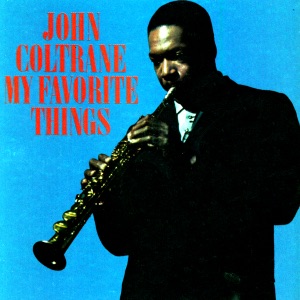
Thirteen minutes on a soprano saxophone John Coltrane leaves Miles Davis in April and forms his own quartet with McCoy Tyner on piano and Elvin Jones on drums. At Atlantic Studios in October, engineer Tom Dowd sets up an eight-track custom console with Neumann microphones. Coltrane picks up a soprano saxophone he acquired after hearing Steve Lacy play one, and improvises over a two-chord vamp on My Favorite Things for thirteen minutes and forty-one seconds. The instrument sounds nothing like it does in a classical setting: nasal, insistent, almost like a voice.
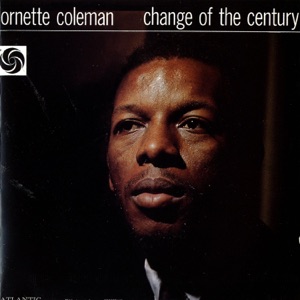
Thirty-six minutes, no stopping Ornette Coleman assembles two complete quartets and records Free Jazz as a single continuous take at A&R Studios on December 21. One quartet pans left, the other right: Coleman and Don Cherry on one side, Eric Dolphy and Freddie Hubbard on the other, two bassists, two drummers. Thirty-six minutes and twenty-three seconds, no chord changes, no written melody, no overdubs. Atlantic titles the album after the piece. The term becomes the name of an entire movement.
$125,000 for one hour of television Elvis Presley is discharged from the Army on March 5 and nobody knows if he can still sell. On March 26, he tapes a special at the Fontainebleau Hotel in Miami with Frank Sinatra. Elvis sings Witchcraft. Sinatra sings Love Me Tender. The broadcast draws 67.7 percent of the television audience. Elvis receives a hundred and twenty-five thousand dollars for a single appearance. His first post-Army single, Stuck on You, is on store racks within a week of recording and goes straight to number one. Three more number ones follow before the year is out.
Grown men in tears on the fourth take Patsy Cline records I Fall to Pieces at a Nashville session produced by Owen Bradley in November. She thinks the pop ballad style doesn't suit her. On the fourth take, every man in the studio is in tears. Bradley says that's the one. The single won't be released until January, and it will climb to number one while Cline is hospitalized after being thrown through a windshield in a car accident the following June.
Four days in a hotel ballroom Joan Baez records her debut album in four days in the ballroom of Manhattan Towers Hotel. Thirteen traditional folk songs, one voice, one guitar, produced by Fred Hellerman of the Weavers. She chose Vanguard Records over Capitol because the smaller label had no gold records on the walls. The album reaches the Top 20, an unlikely result for unaccompanied folk ballads. Baez is nineteen. Within a year she will be the most visible folk singer in America.