


















Nine hours and forty-five minutes On February 11, the Beatles arrive at Abbey Road Studios at 10 a.m. and leave after 10:45 p.m. In between, they record ten songs for their debut album, plus four sides already released as singles. John Lennon's voice is shredded by a cold, so they save Twist and Shout for the final take of the day. He tears through it in a single pass, gargling warm milk and sucking cough drops between songs. The album, released on March 22, sits at number one in Britain for thirty weeks. It costs about four hundred pounds to record.
One million advance orders She Loves You is released on August 23 and sells a million copies in Britain alone, the first single by any act to do so. By November, the press has a word for what is happening at concerts: girls fainting, police forming cordons, screams so loud the band cannot hear itself play. On November 4, the band performs at the Royal Variety Performance. John Lennon tells the audience: Will the people in the cheaper seats clap your hands? And for the rest of you, if you'll just rattle your jewelry. He had planned a ruder version. I Want to Hold Your Hand is released on November 29 with one million advance orders and knocks She Loves You off number one on December 14, the first time any act has replaced itself at the top of the British chart.
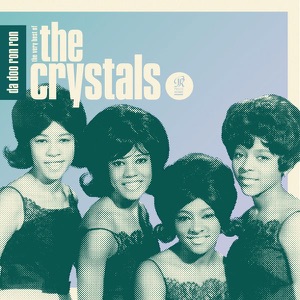
A dropped drumstick at Gold Star Hal Blaine is supposed to hit the snare on beats two and four. He drops a stick and catches only beat four. Phil Spector keeps the mistake. The overhead microphone picks up the bass drum resonating through the room, and that accident becomes the most famous drum intro in pop music. Ronnie Bennett sings the lead vocal in a room packed with multiple pianos, multiple guitars, a horn section, strings, and castanets, all playing at once in a space designed for half as many musicians. The echo chambers do the rest. The record peaks at number two and never reaches number one, but the sound it makes changes what producers think is possible.
A sixteen-year-old beats Spector to the radio Quincy Jones selects a song from more than two hundred demos for a sixteen-year-old singer still attending high school in New Jersey. When word leaks that Phil Spector is cutting the same song with one of his groups, Jones rushes advance copies to radio stations across the country. Spector cancels his version. The single climbs to number one in four weeks. Jones, already an accomplished jazz arranger and film scorer, discovers a new talent: hearing a hit in a demo tape and getting it on the air before anyone else can.
A thirteen-year-old at number one Stevie Wonder is thirteen years old when his live recording from the Motortown Revue reaches number one on the Hot 100 on August 10. It is the first live recording ever to top the chart. The hit is an encore performance, originally pressed as a B-side. The album hits number one at the same time, making Wonder the first artist to hold both positions simultaneously. His label becomes the first independent company to achieve that double.
The song that came from church on Sunday Rufus Thomas is driving home from church when he spots cars parked outside the Memphis studio where Booker T. and the MGs rehearse. He has an idea for a song that came to him during the service. After a few run-throughs, the band records it on the spot. A visiting New York producer happens to be in the building, hears the playback, and makes it one of the label's next releases under its distribution deal with Atlantic. The single reaches number ten pop. Thomas is fifty years old, one of the oldest R&B hitmakers on the chart.
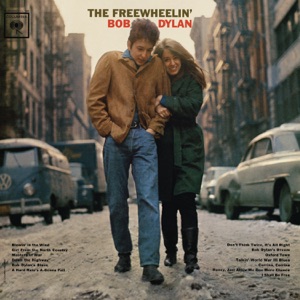
300,000 copies in a week Peter, Paul and Mary release a cover of Blowin' in the Wind in June, three weeks after the album version appears. It sells 300,000 copies in its first week and reaches number two pop. A folk protest song written by a twenty-one-year-old has crossed into the pop mainstream without changing a note. Both artists share the same manager. At the Newport Folk Festival in July, Dylan, Joan Baez, Pete Seeger, and the Freedom Singers link hands and sing We Shall Overcome to close the final night. A month later, Dylan performs at the March on Washington before 250,000 people.
A melody drawn from a eulogy On September 15, a bomb kills four girls at the 16th Street Baptist Church in Birmingham, Alabama. John Coltrane composes a piece in response, deriving its melodic rhythm from the cadences of Martin Luther King Jr.'s eulogy for the victims, delivered three days after the bombing. He records it on November 18 at a studio in Englewood Cliffs, New Jersey. The melody rises and falls with the pacing of spoken grief, the tenor saxophone breathing where King breathed. Nina Simone, learning the news in her living room, writes Mississippi Goddam in under an hour, her response to both the bombing and the murder of Medgar Evers three months earlier.
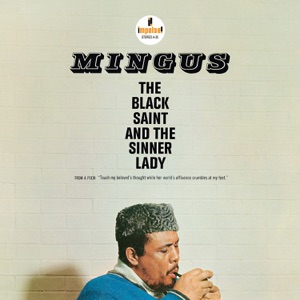
Liner notes by the composer's therapist Charles Mingus records his most ambitious work on January 20 with an eleven-piece ensemble: a single continuous composition, partially conceived as a ballet, divided into six movements. He calls it ethnic folk-dance music rather than jazz. The liner notes are written by his psychotherapist, Dr. Edmund Pollock, who describes the music as a musical extension of Mingus's personality. The album is recorded in one session. Mingus considers it his masterpiece.
Released the same day America stopped November 22, 1963: three records arrive at once. In London, the Beatles release their second album. In the United States, Phil Spector releases a Christmas album featuring the Ronettes, the Crystals, and Darlene Love, backed by dozens of session musicians. One of the background vocalists is a seventeen-year-old named Cherilyn Sarkisian. That same afternoon, President Kennedy is assassinated in Dallas. The Christmas album, one of the most lavish pop productions ever attempted, is dead on arrival. It will not find its audience for nearly a decade.
The compact cassette in a suitcase At the Berlin Radio Exhibition in August, Philips unveils a pocket-sized tape recorder that uses a small plastic cartridge instead of open reels. No threading, no fumbling with loose tape. The cartridge is smaller than a paperback book. Three years later, Philips will license the format for free to any manufacturer willing to maintain compatibility. Home recording, portable listening, and the mixtape are all now physically possible. Almost nobody notices.