




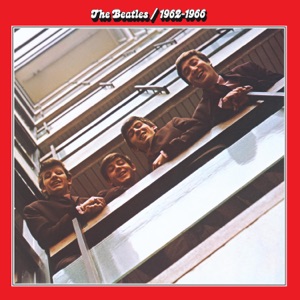













73 million people watch five men tune up The Beatles play the Ed Sullivan Show on February 9, five days after landing at JFK to a crowd of five thousand screaming teenagers. An estimated 73 million Americans watch, the largest television audience in history at the time. During the broadcast, the crime rate reportedly drops to near zero. By April 4, they hold all five top positions on the Billboard Hot 100 simultaneously, a feat no artist has matched since. The British Invasion is not a metaphor. It is a logistical event: planes, customs, television cameras, and an accent Americans find irresistible.
A razor blade and a little green amp Dave Davies of the Kinks is alone at home in Muswell Hill, north London, upset about being separated from his girlfriend. Rather than slash his wrists, he takes a razor blade to the speaker cone of his Elpico amplifier, pokes it with a pin, then runs it through a larger Vox as a pre-amp. The resulting distortion on You Really Got Me is something new: thick, buzzing, harmonically unstable. The single goes to number one in the UK and number seven in the US. Two decades of hard rock and heavy metal trace a direct line back to a teenage boy attacking a speaker cone.
A single take at De Lane Lea The Animals record The House of the Rising Sun in one take on May 18 at De Lane Lea Studios in London. The arrangement transforms a traditional folk ballad into a four-and-a-half-minute electric minor-key dirge, driven by a pulsing organ and a famous opening arpeggio. At nearly four and a half minutes, it is unusually long for a pop single. It reaches number one in both the UK and the US. Arranging credit goes to the organist alone, reportedly because there was not enough room to list all five band members on the label.
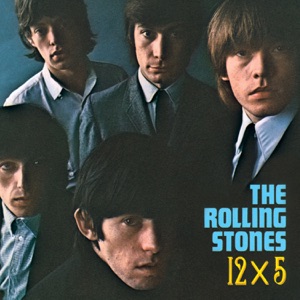
Recording at the temple The Rolling Stones arrive at Chess Studios in Chicago on June 10 during their first US tour. This is the building where Muddy Waters, Chuck Berry, and Howlin' Wolf made their records, the studio the Stones grew up worshipping. They record It's All Over Now and Time Is on My Side. In December, their cover of Willie Dixon's Little Red Rooster, with Brian Jones on slide guitar, reaches number one in the UK: the only blues song ever to top the British chart.
Five consecutive number ones begin The Supremes have released eight singles on Motown. None has cracked the top twenty. Then Holland-Dozier-Holland write and produce Where Did Our Love Go, and it reaches number one on August 16. Baby Love follows it to the top. Then Come See About Me. Three consecutive chart-toppers in 1964 alone, the start of a run of five. The production is deceptively simple: handclaps, foot stomps on a wooden board, a bass line that locks to the kick drum, and three voices arranged so precisely they sound effortless.
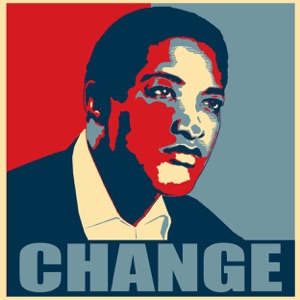
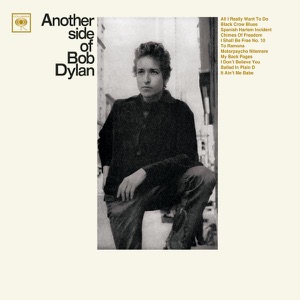
A change is gonna come Sam Cooke records A Change Is Gonna Come on January 30 at RCA Studios in Hollywood with a full orchestra. The song is inspired by two collisions: being turned away from a whites-only motel in Louisiana with his family, and hearing Bob Dylan's Blowin' in the Wind and feeling compelled that a Black artist should be saying these things too. The single is released on December 22, eleven days after Cooke is shot and killed at a Los Angeles motel at age thirty-three. It becomes one of the most important protest songs ever recorded, arriving without its singer.
Mississippi Goddam, returned broken in half Nina Simone writes Mississippi Goddam in less than an hour in response to the murder of Medgar Evers, the 16th Street Baptist Church bombing, and the killing of four Black children. She records it live at Carnegie Hall. Several Southern radio stations receive promotional copies and return them to the label snapped in half. It is her first civil rights song and the most direct musical response to the violence. The album is titled Nina Simone in Concert.
A sixty-two-year-old interrupts the Beatles Louis Armstrong records Hello, Dolly! as a demonstration track for the Broadway show. Nobody expects it to be a hit. It reaches number one on May 9, making Armstrong the oldest person ever to top the Hot 100 at sixty-two. More significantly, it ends the Beatles' streak of three consecutive number ones spanning fourteen weeks. A jazz trumpeter from 1920s New Orleans, who recorded his first records on 78s, briefly holds off the future.
A Rickenbacker on a rooftop in Los Angeles In early 1964, Roger McGuinn, Gene Clark, and David Crosby form a group in Los Angeles. McGuinn begins playing a twelve-string Rickenbacker electric guitar, running Beatles-influenced chords through folk-based melodies. In August, their manager acquires an acetate of Bob Dylan's Mr. Tambourine Man. McGuinn changes the time signature from 2/4 to 4/4. They rehearse at World Pacific Studios through the fall, honing a sound that fuses folk lyrics with electric pop arrangements. Dylan himself reportedly hears their reworking and is partly inspired to go electric. The group changes its name to the Byrds over Thanksgiving. The single will reach number one the following June.
Four tracks, reduction mixes, and a jangling chord EMI upgrades Abbey Road to four-track recording for the A Hard Day's Night sessions. Engineers develop a technique called reduction mixing: recording several tracks, mixing them together, and transferring the result to one track of a second four-track machine. This effectively multiplies the available tracks beyond four. The opening chord of the title song, recorded April 16 in nine takes, is built from a twelve-string electric guitar, an acoustic guitar, bass, and piano, all struck simultaneously. Nobody who hears it can quite figure out what the chord is.
My Guy on her twenty-first birthday Mary Wells turns twenty-one on May 13. Three days later, My Guy, written and produced by Smokey Robinson, reaches number one on the Hot 100. It is the first number one single on the Motown imprint itself. On her birthday, Wells calls Berry Gordy and says she wants to leave the label, as her contract expires the day she turns twenty-one. It proves to be her last solo hit for Motown. She walks away at the exact moment the assembly line produces its cleanest product.